
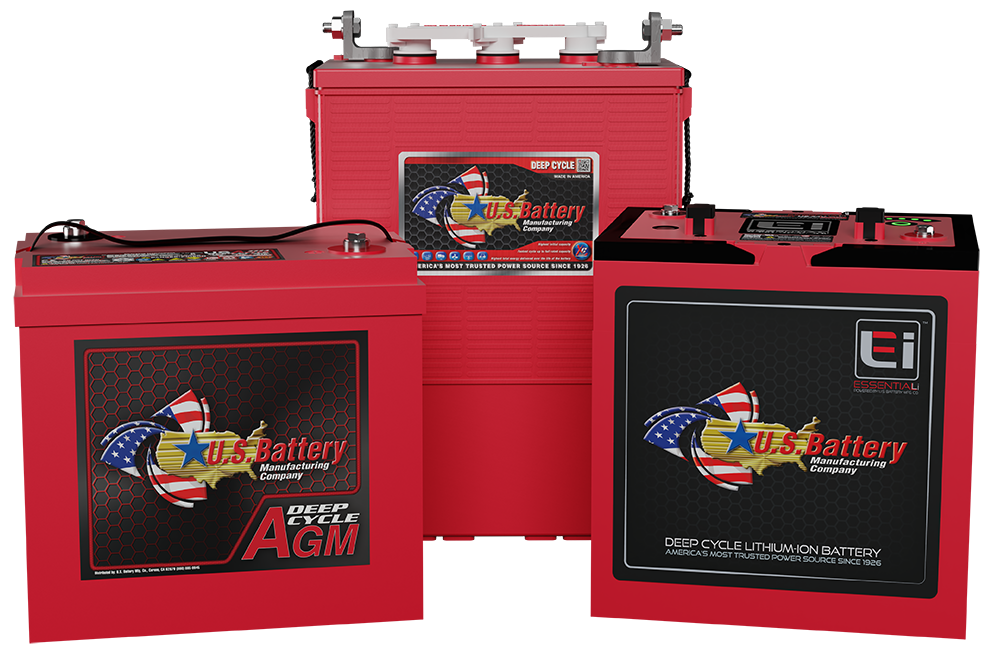
Deep-cycle batteries can last a long time when properly stored and maintained. But if your batteries have sat around for a few months and you want to see if they are still in working condition, there are easy ways to test them.
1) Visual Check:
Once you locate your deep-cycle battery, clean and dust it off with a dry cloth and look for any leaks, bulges, or cracks along the case. White residue around the case, floor, or battery mount (enclosure) of Flooded Lead Acid (FLA) batteries indicates a leak, and the battery should be replaced. AGM and Lithium batteries won’t leak, but they should also be checked for any visible damage if they were moving around in the compartment.
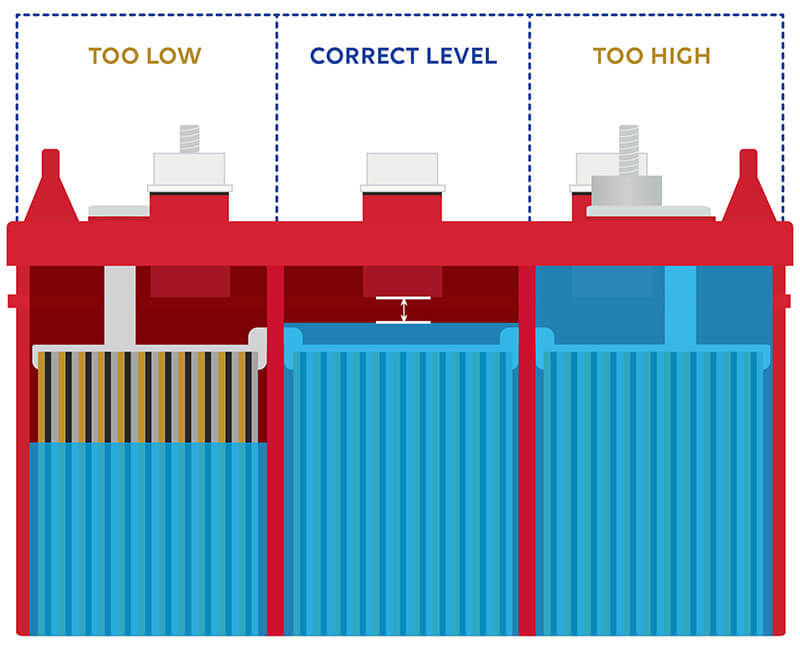
Open the caps on the top of the FLA battery, using a pair of safety gloves and glasses. If the water level is low, refill it with distilled water to 1/4″ from the bottom of the fill well cover. Check for any additional spillage.
2) Check the Terminals:
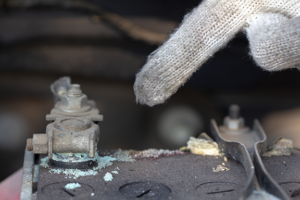
Consult your battery’s maintenance manual to determine the correct torque settings for terminal connections. Terminals should not be loose and should be free of any corrosion. They can be cleaned with a solution of baking soda and water, using a nylon brush, to remove any electrolyte corrosion.
Cleaning the terminals:
- Mix a solution of 1 cup of baking soda and 1 gallon of water (60ml baking soda per liter of water).
- Apply the solution to the top of the batteries, terminals, and connections with the brush to remove corrosion.
- Rinse with water and dry with a microfiber cloth.
- Apply a thin coat of terminal protector spray or terminal protection grease. Apply this after installation of cables, not before. A coating between the terminal and the cable can cause resistance.
- Keep the area around the batteries clean and dry.
Do not allow the cleaning solution to get inside the battery
3) Check Voltage:
Using a digital multimeter, set the voltage to DC and up to a 20v range. The probes on the multimeter are red for positive and black for negative. Touch them to the appropriate terminals and measure the voltage. For FLA batteries:
- 12.7V+ = 100% Charged
- 12.1V = 50% Charged
- 11.8V or lower = Heavily Discharged
AGM Batteries differ in voltage and are usually much higher. It’s best to check the manufacturer information for your specific battery to determine its voltage range.
Lithium-ion batteries may come with an LED monitor on top of the case that indicates their charge level.
4) Charge the Battery:
Connect your battery charger and perform a full charge. Make sure your charger is correct for lead-acid (FLA and AGM), as there are different chargers for Lithium batteries. Afterward, let it sit for a few hours, then retest it with the multimeter. If the voltage has dropped, it is not holding a charge and needs to be replaced.
5) Take It To Your Battery Dealer:
If you’re not sure of your testing methods, take the battery to your battery dealer, and they can perform a load test to see if it holds a charge.
These are simple ways to test your deep-cycle battery; always refer to the manufacturer’s website for more information. U.S. Battery has a full User Manual for all of its FLA, AGM, and Lithium-ion batteries, which is free to download.