
BATTERY TECHNOLOGY: FLOODED LEAD-ACID

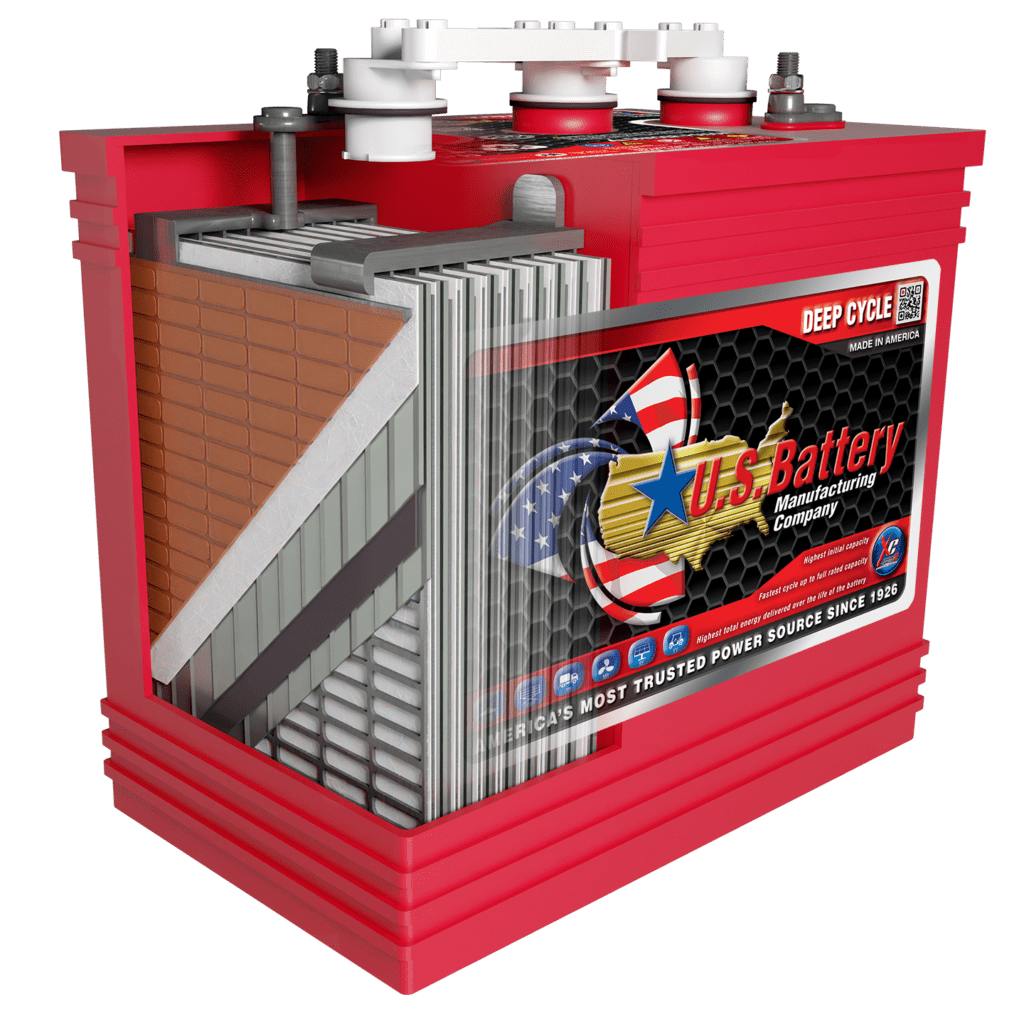
Cutaway view of U.S. Battery Deep Cycle Flooded Lead acid Battery

How Cell Plate Design Helps An Established Battery Technology Evolve

It’s amazing to think that the history of deep-cycle, flooded lead-acid (FLA) batteries goes back 150-years, but these batteries continue to be the most cost-effective, reliable, and sustainable forms of battery power used today. The idea of lead plates emerged in an electrolyte acid seems simple enough, but small developments in the design continue to make the FLA battery a popular choice among a variety of industries.

Improving Grid Plates

Pushing the limits of century-old technology to keep up with the demands of modern equipment is an important step for battery manufacturers like U.S. Battery. As the demand for longer-lasting power and shorter charging times increases, manufacturers must continue exploring ways to improve FLA battery chemistry. U.S. Battery found that the limits of the design appeared in the inevitable corrosion that occurred in the battery’s positive cell grid plates.

These grid plates were typically manufactured from recycled lead alloy, a soft metal composed of lead and antimony, a mixture of lead and other metals added to improve strength and electrical conductivity.

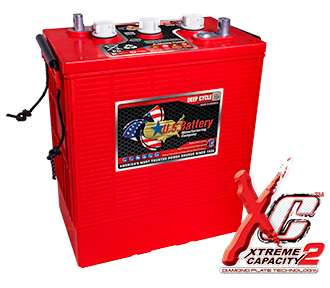
US 305N XC2 deep cycle battery with XC2 logo

 Through testing, U.S. Battery discovered that adding Selenium to the lead-antimony mixture refined the lead grains at the microscopic level. This produced a finer lead alloy with greater strength and corrosion resistance over conventional lead-antimony alloys. The effect of these new grid alloy improvements eliminated positive grid corrosion as a primary failure mode for FLA batteries and contributed to the battery’s improved cycle life.

Growing Lead Sulfate Crystals

The basic composition of a battery consists of both positive and negative plates that, when immersed in an electrolyte, produce an electric current.  The active materials on the positive plates have been constantly improved over the decades. Most are now made from a mixture of lead oxide, sulfuric acid, and various additives to form a paste that is added to the lead grid alloy and dried to form a battery cell.

This process is called Hydroset, a curing and drying process in the manufacturing of lead-acid battery plates. Historically, positive electrodes have been processed using this procedure, which is designed to grow tetrabasic lead sulfate (TTBLS) crystals on the plates to provide strength and to resist the constant expansion and contraction of the active materials during normal battery charging and discharging (cycling).  This crystal growing process had limitations in its ability to control the range of sizes of the TTBLS crystals, causing some to be larger than others. Crystal growth depended on many factors such as time, temperature, humidity, etc., so the sizes of the finished TTBLS crystals were always unpredictable.  This was seen as a limiting factor in the battery’s overall runtime on a single charge, the time required to reach a full charge, and the battery’s overall cycle life.
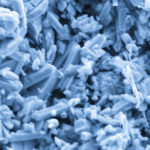
microscopic view of Xtreme Capacity 2 TTBLS crystalsU.S. Battery engineers worked on methods to improve the Hydroset process by introducing crystal seeding additives. This changed the wide range of crystal sizes, allowing for a more controlled growth to desirable levels.  Being able to control the size of the crystals in the TTBLS structure uniformly resulted in increased initial capacity, faster cycle-up to rated capacity, higher peak capacity, and improved charging performance across a wide range of modern battery charger technologies. U.S. Battery called this process Xtreme Capacity and added it to their entire line of FLA deep-cycle battery products.

Advanced Organic Materials

Further improvements have come from the addition of organic materials, such as carbon additives like advanced graphite, graphene, and nano-carbons, improved dynamic charge acceptance, and controlled sulfation in the negative plates of FLA deep-cycle batteries. Carbon additives also prevented the natural tendency of the negative active material to shrink or coalesce during cycling, which reduced the battery’s capacity and life.   

Recent advances in these carbon materials have opened new opportunities to address several performance limitations of FLA lead-acid batteries.  One of them is in energy storage applications, where unpredictable charging from solar, wind, and other renewable energy sources has enabled advancements in reliability and energy storage capability.

A Viable Power Source

The improvements made over the decades to FLA deep-cycle batteries continue to make them a viable power source for many industries. With proper maintenance and care, FLA batteries are suitable for budget-conscious companies and individuals and are useful in situations where weight is not a concern. In these cases, the modern FLA battery has lower upfront costs, has proven to be a reliable technology, is nearly 100-percent recyclable for green initiatives, and is very robust.

Leave a Reply

Your email address will not be published. Required fields are marked *

Search